This historical documentary recreates one of the darkest chapters in the history of Sibu and the Rajang Basin during the Japanese Occupation of Sarawak in World War II.
Through cinematic AI-generated reconstructions, archival-inspired visuals, and historically researched storytelling, this film follows the transformation of Sibu into “Sibu-shu (志布州)” under Imperial Japanese administration — from invasion, military rule, forced labor, fear, bombings, and resistance… to liberation and remembrance.
The 20 minutes documentary covers:
Introduction of Japanese War in Malaya, Miri then Kuching
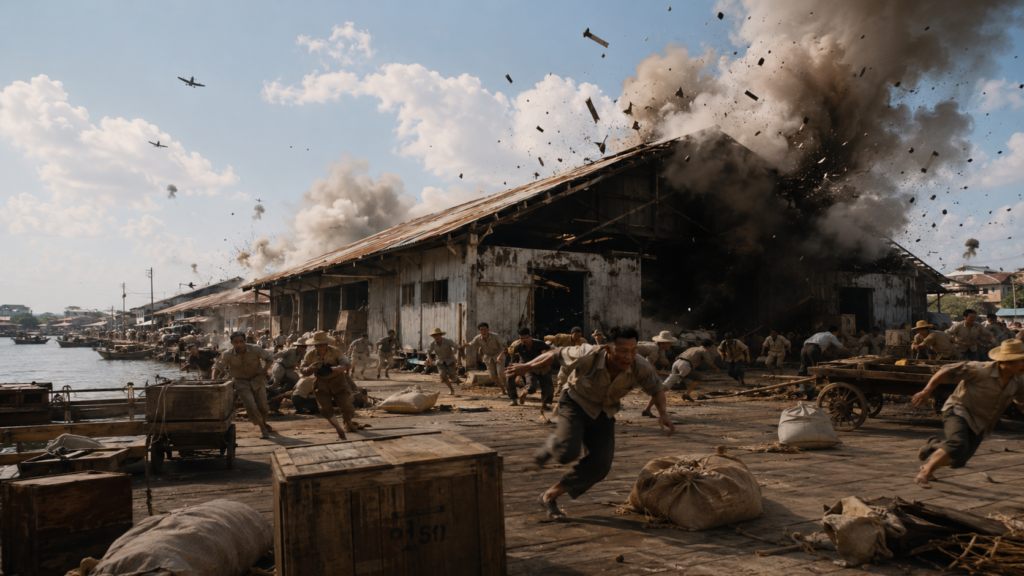
The Bombing of Sibu by Japanese Planes
The arrival of Japanese forces in Sibu
Establishment of Sibu-shu administration
Kempeitai control and wartime suffering
Teku Airfield constructions and military operations
Allied bombing raids over Sibu
Operation Semut and guerrilla resistance
The surrender of Lieutenant Noda at Bukit Lima
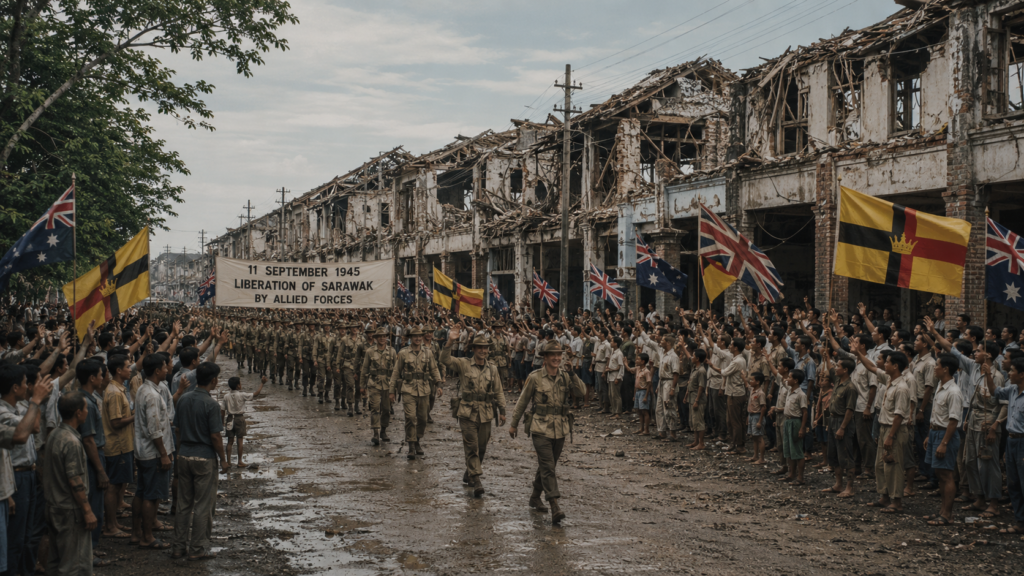
Liberation of Sibu and Sarawak in 1945
Japanese repatriation under Operation Exodus
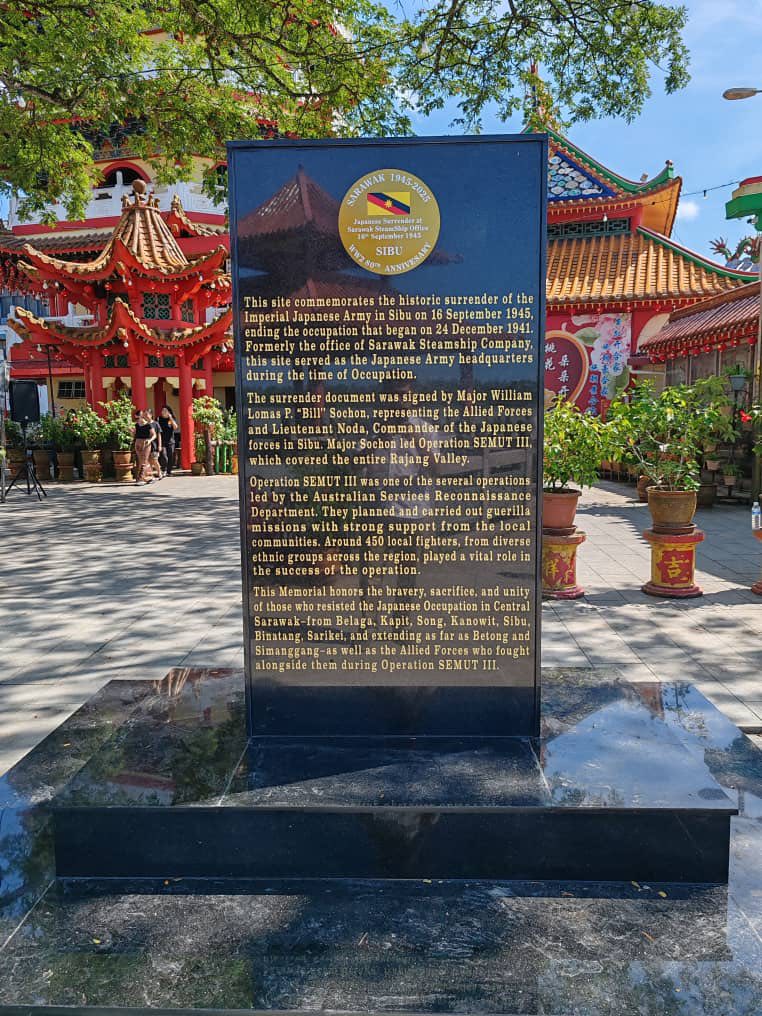
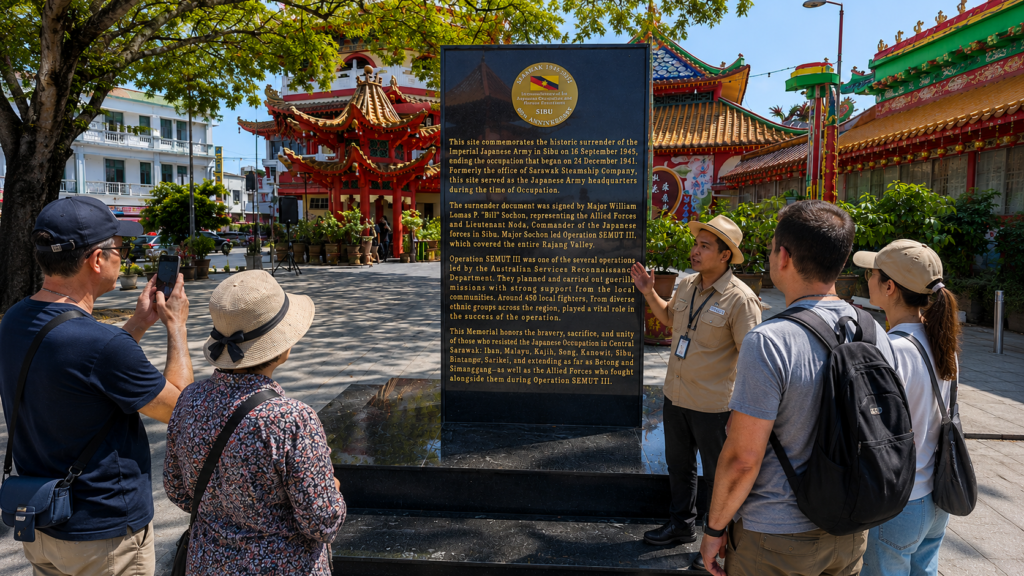
The modern-day remembrance memorial in Sibu
Many scenes were inspired by real wartime photographs, historical records, survivor accounts, and writings related to Sarawak during WWII.
This film is dedicated to all who endured the occupation, those who never returned, and future generations who continue to remember.
Historical Timeline
1941 — Japanese invasion begins 1942 — Sibu falls under Japanese occupation 1945 — Allied liberation and surrender in Sibu 2025 — 80th Anniversary Memorial unveiled in Sibu
Special Note
This documentary was created using AI-assisted visual storytelling technologies combined with historical research and local Sarawak history preservation efforts. Many of the old photos were from Internet, some with named owner, some unknown, some commonly published, not sure who’s the original owners.
Major Facts Reference
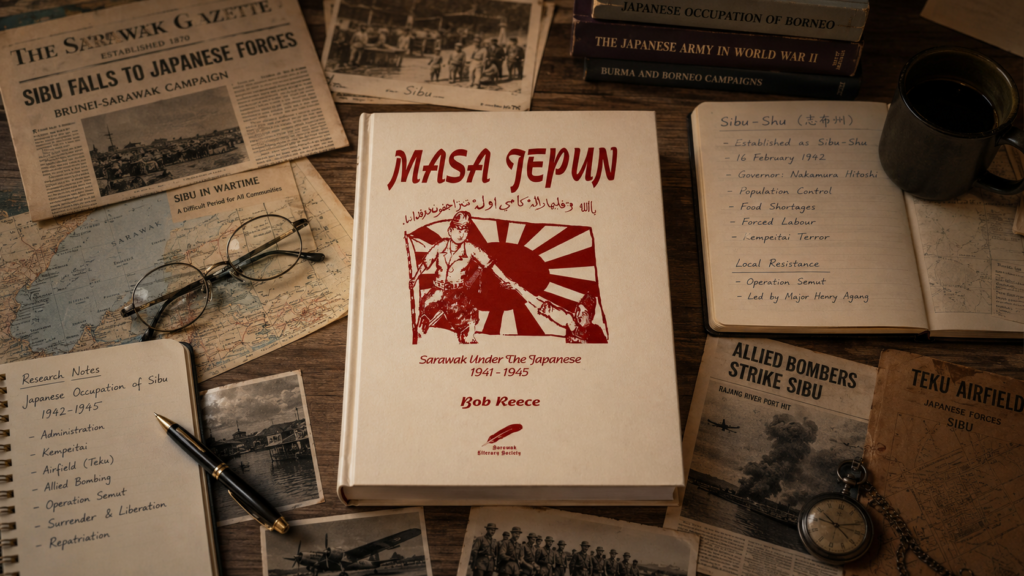
Most of the timeline, detail descriptions on incidents and story characters are fact checked with Bob Reece’s “Masa Japan”
I was lucky to be able to loan a copy from Mr John Ting to continue my findings and finalising all detail timeline, and then work on my storyboards, before commencing on the Ai video production
I had also visited the 砂拉越华族文化协会Sarawak Chinese Cultural Association, to get some info
I had tried to contact a few other local historians / photographers, trying to get some old photos that I needed, some were not available when I made the visit to Sibu
A lot of scene were recreated from old photos, trying to be as close as possible to the environment, buildings, attires and culture at the time of incidents
The book is out of print, There’s a used book from UK’s OXFAM Shop
Getting The Sibu Surrender Scene Done
In Bob Reece’s Masa Jepun Book, he gave a very detail write-up on the Japanese Surrender in Sibu, which was done around Lanang Road, not the Rejang Riverfront as most people had written about.
In his writing:
Following the arrangement made with Noda, the next morning Sochon and his party walked from the Tai Khun Wharf to an open space in the middle of Lanang Road for the official surrender.
In the meantime, the town had come alive again as people flocked back from the countryside and long-hidden Allied flags were hung from the shop-fronts. Sochon described the simple ceremony that followed:
“With all the dignity that the situation demanded, the two commanders faced each other and Noda handed over his list of weapons, equipment, ammunition and stores. I took it from him and the Japanese stepped back. Saluting smartly, he fumbled at his waist for a moment or two and then, undoing his sash, removed his Samurai sword from his side. Placing it across his two palms, outstretched and upwards, he moved towards me in a final gesture of surrender. Gravely accepting the sword, I waited while Noda stepped back and saluted once more. I returned his salute and the Japanese turned on his heel, marched swiftly to the waiting launch, boarded and snapped out an order to cast off. Without another glance backward he faced the prow of the vessel as it slowly gathered speed and disappeared round the bend of the river to the delighted cheers of the returned populace.”
I managed to get it done in 3 scenes
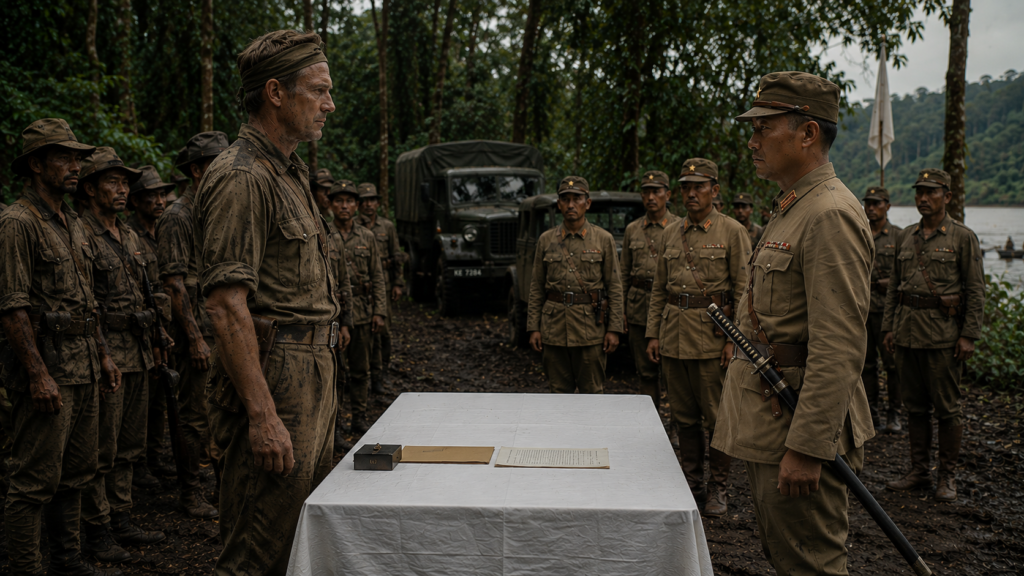
Major W.L.P. “Bill” Sochon British officer Sibu meeting Noda (the Japanese Command in chief in Sibu) at Lanang Road face to faceNoda handed over his list of weapons, equipment, ammunition and stores. Noda then removed his Samurai sword from his side. Placing it across his two palms, outstretched and upwards, Noda moved towards Sochon in a final gesture of surrender. Gravely accepting the swordNoda turned on his heel, marched swiftly to the waiting launch, boarded and snapped out an order to cast off. Without another glance backward he faced the prow of the vessel as it slowly gathered speed and disappeared round the bend of the river to the delighted cheers of the returned populace.
Why are there Chinese subtitle this time
As most of the victims and viewership of this video will likely be 60-80 years old, some of them may not be well verse in English, so I am adding hard-coded Chinese subtitle in the video
As this age group may not know how to switch to Youtube’s Chinese Sub-title if I did a multi-lingual subtitle on Youtube, I hard-coded the subtitle inside the video
So must figure out a way to do multi-lingual subtitle for future videos
Some of the scenes were created from a single old photo
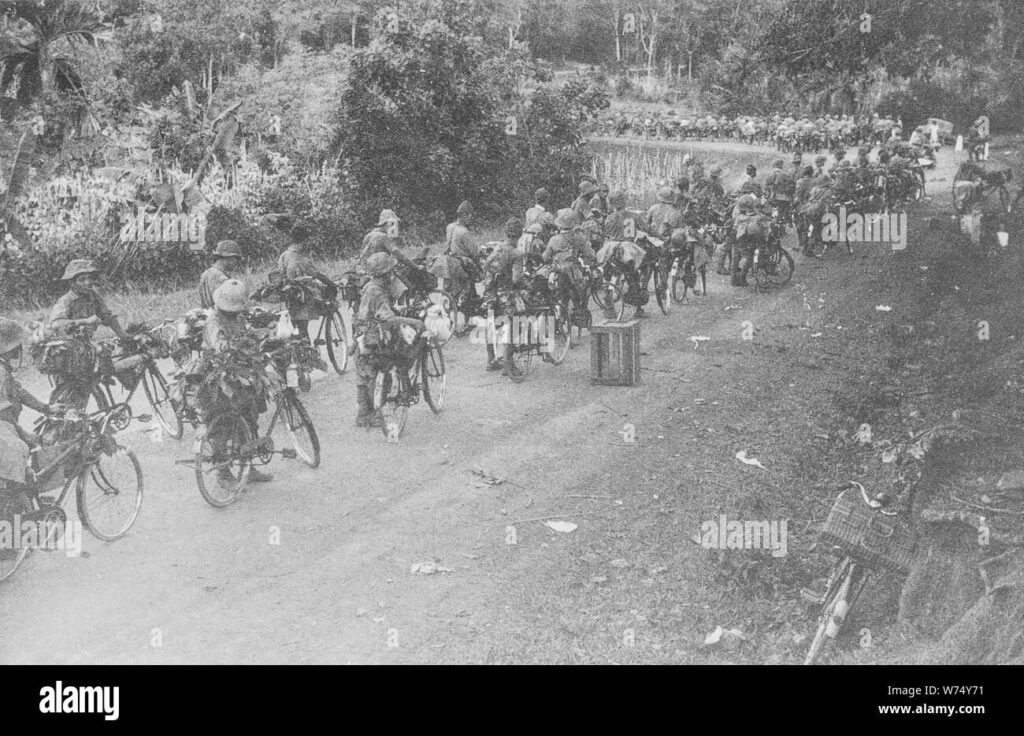
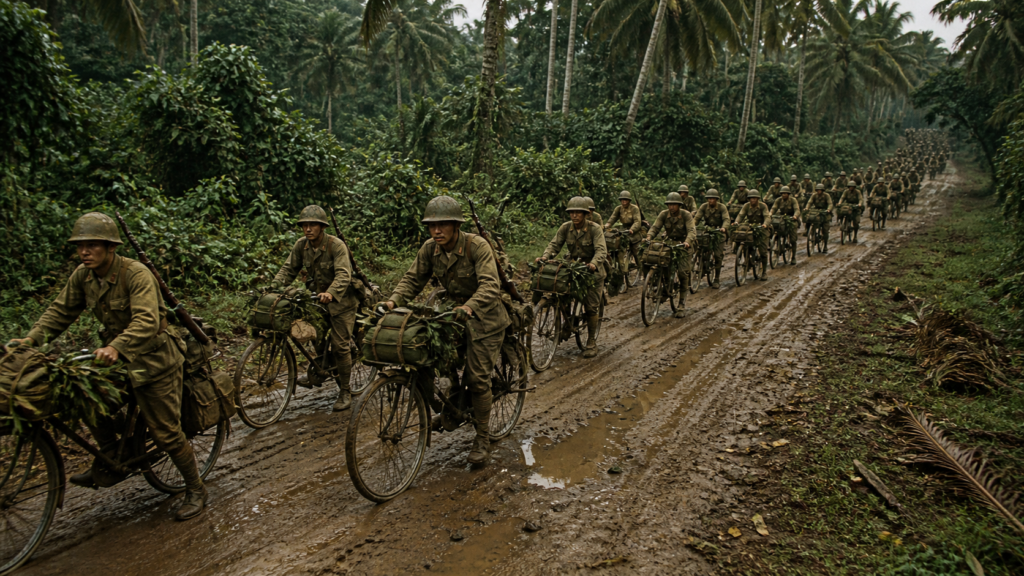
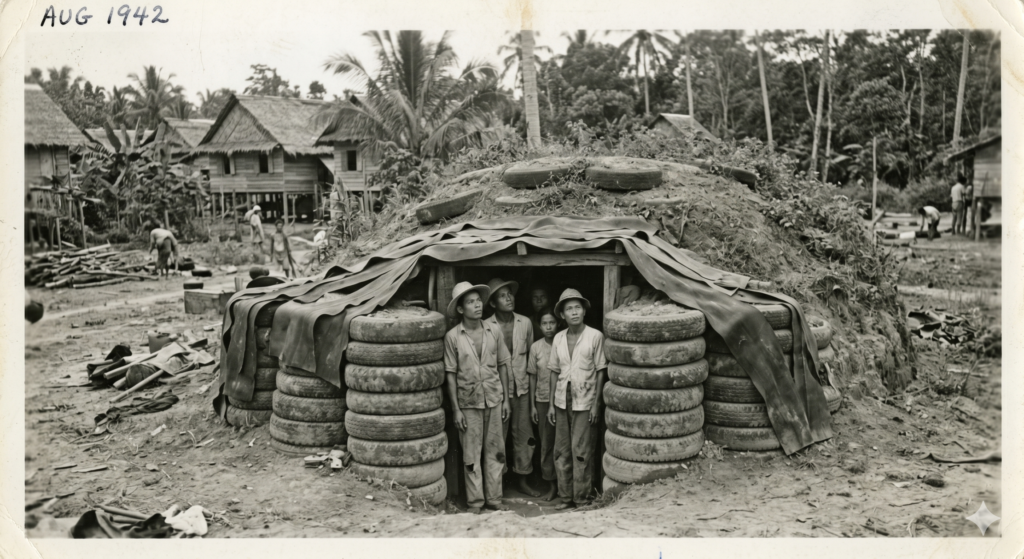
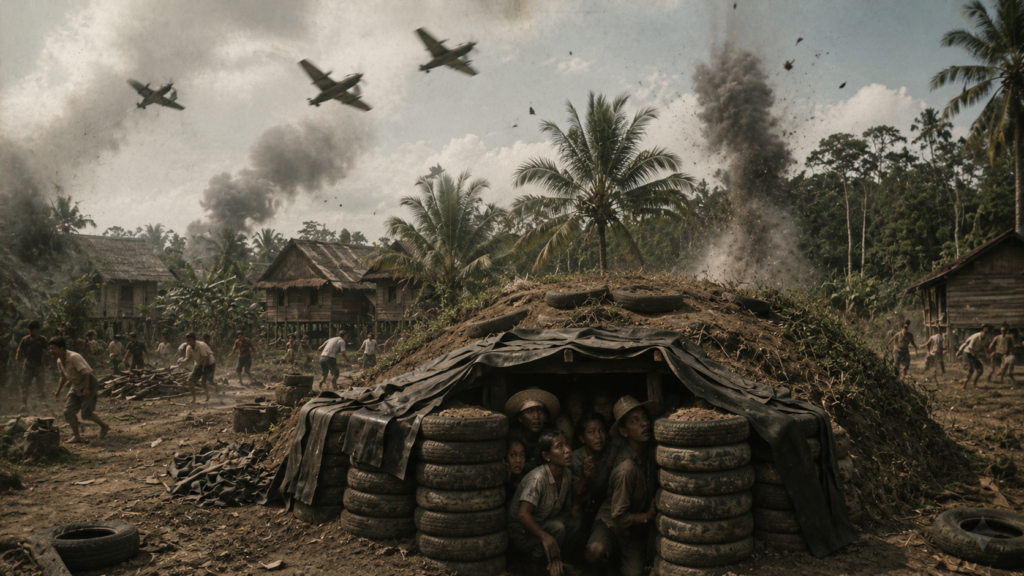
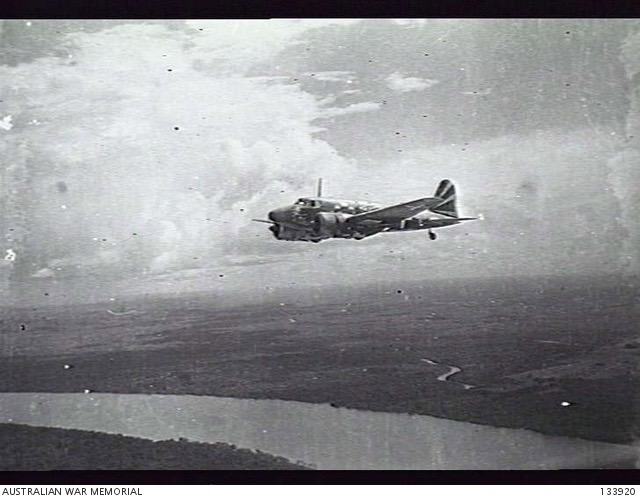
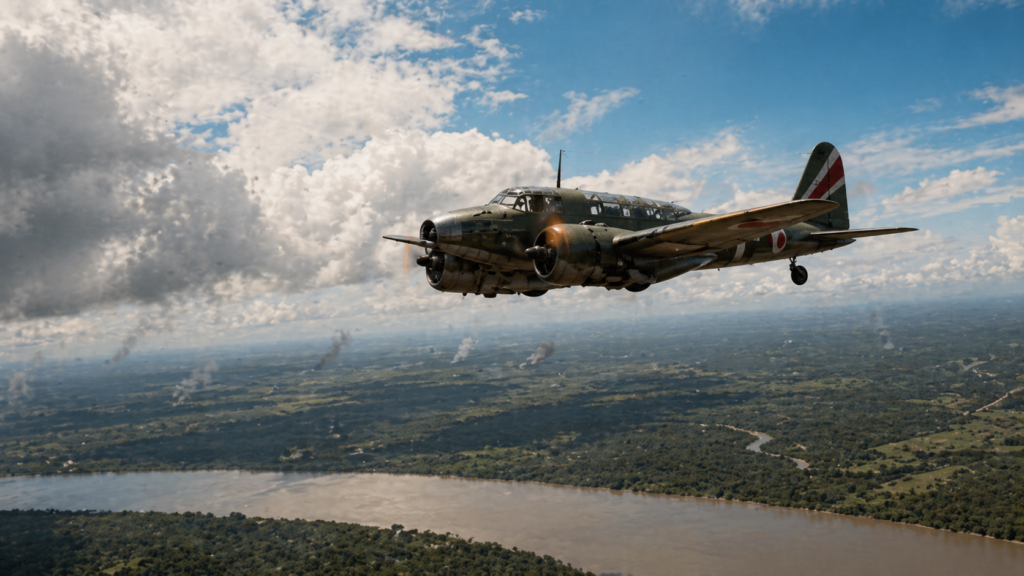
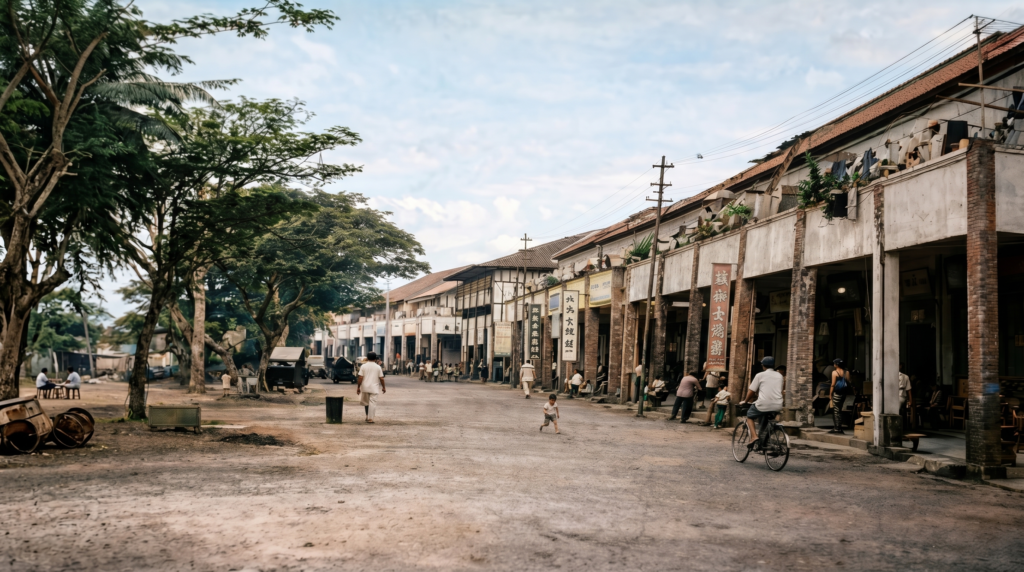
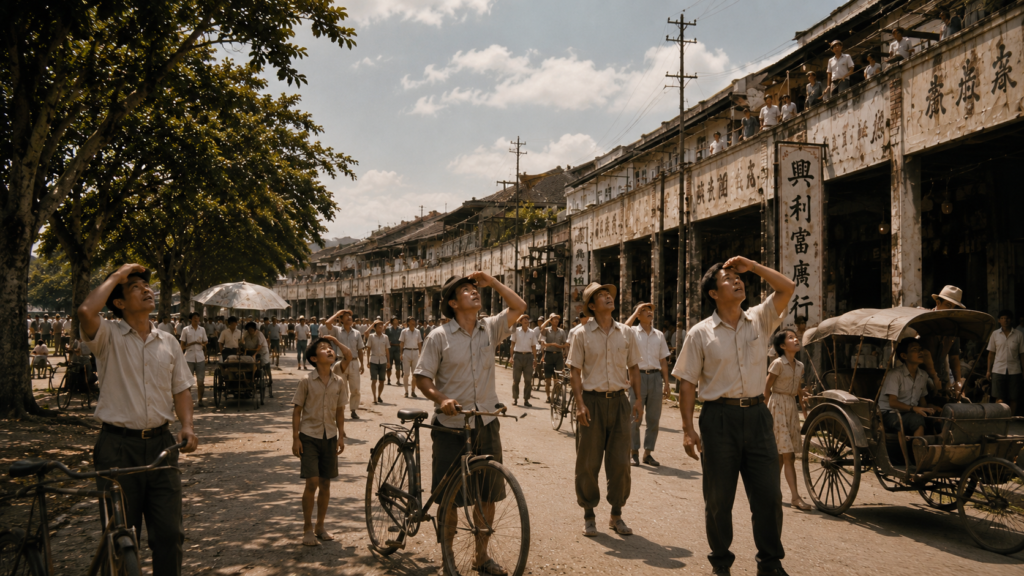
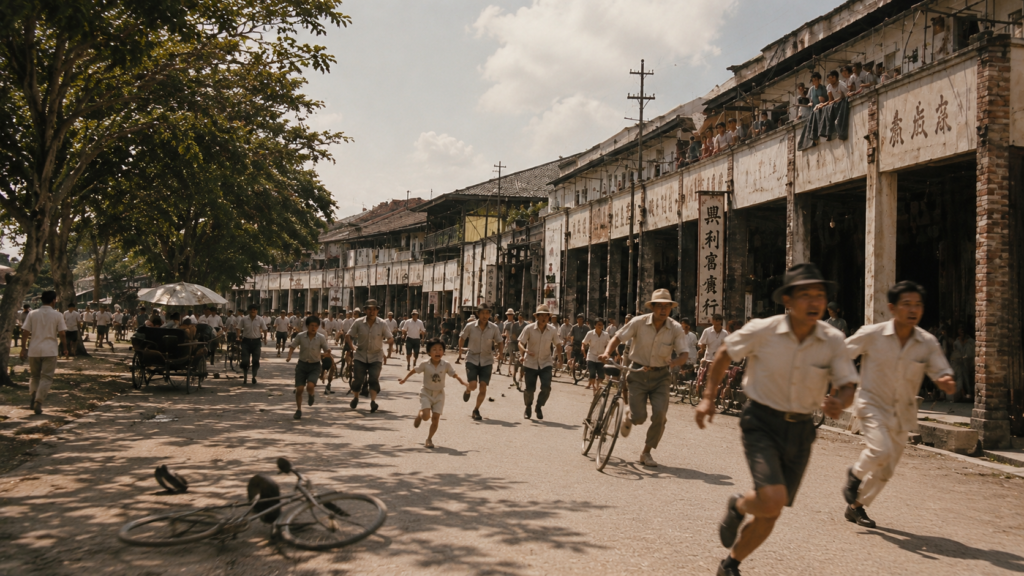
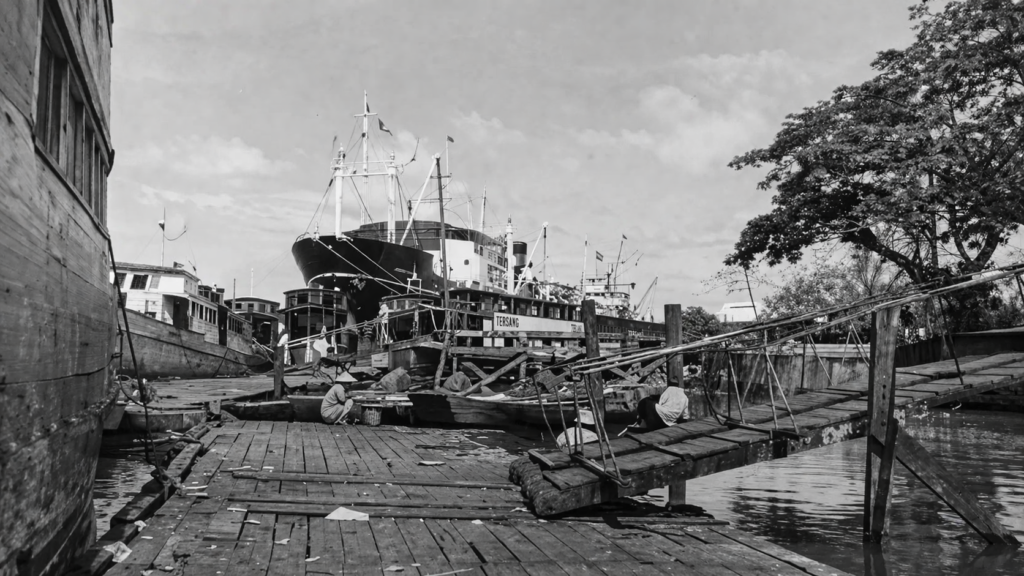
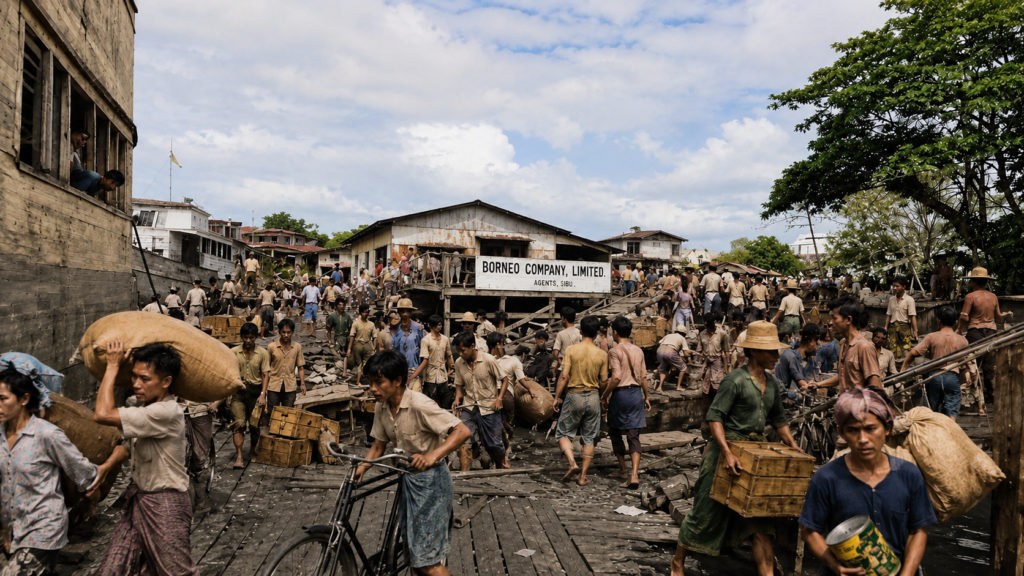
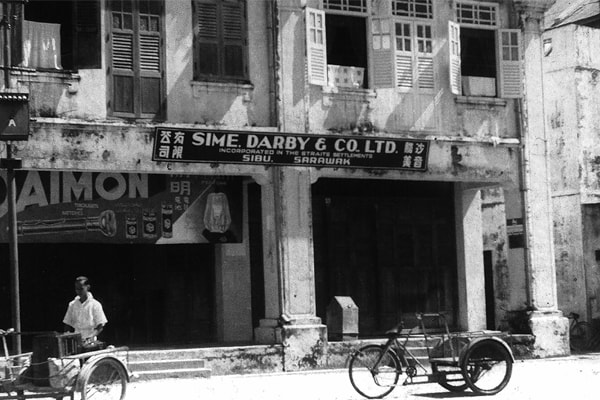
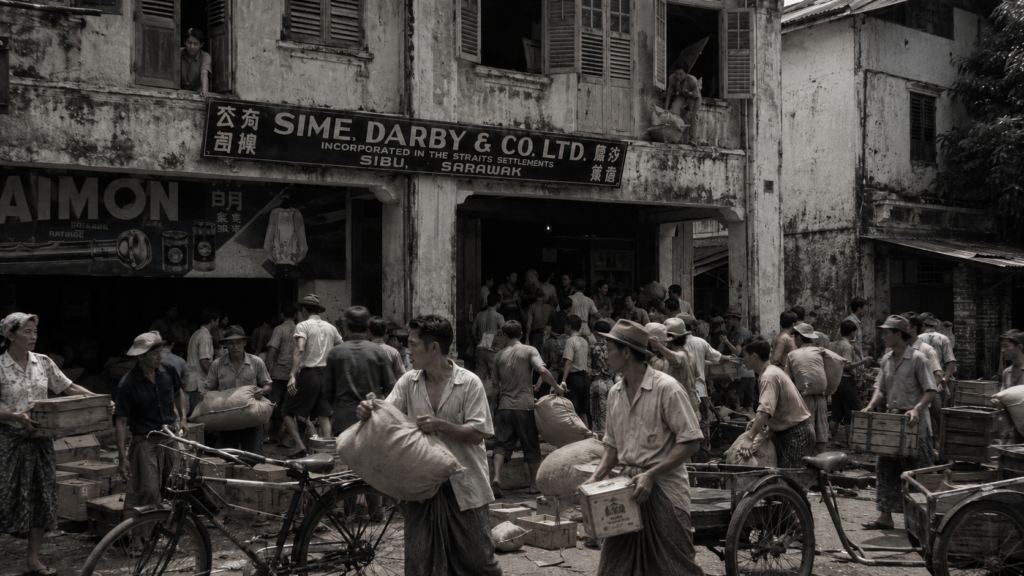
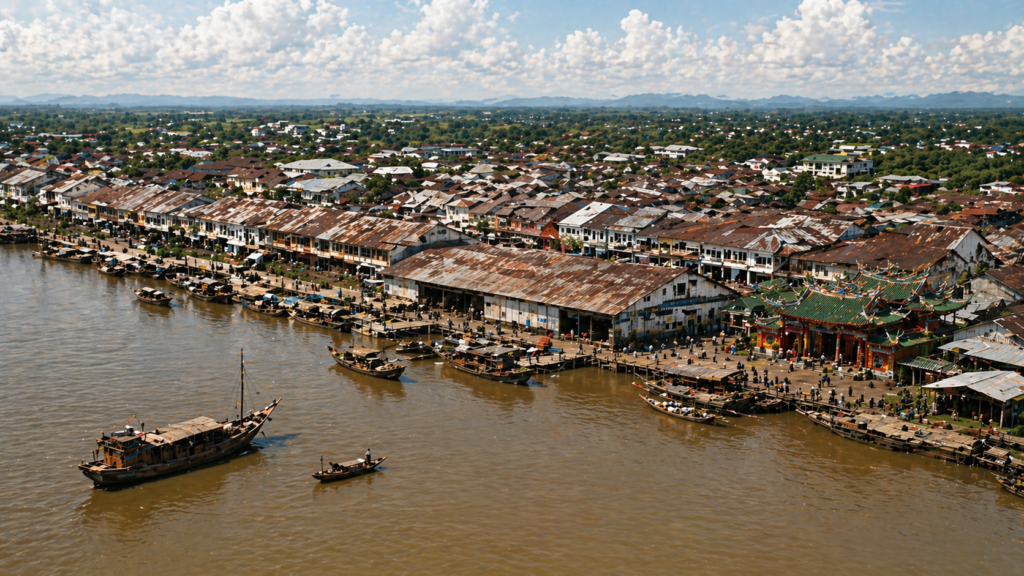
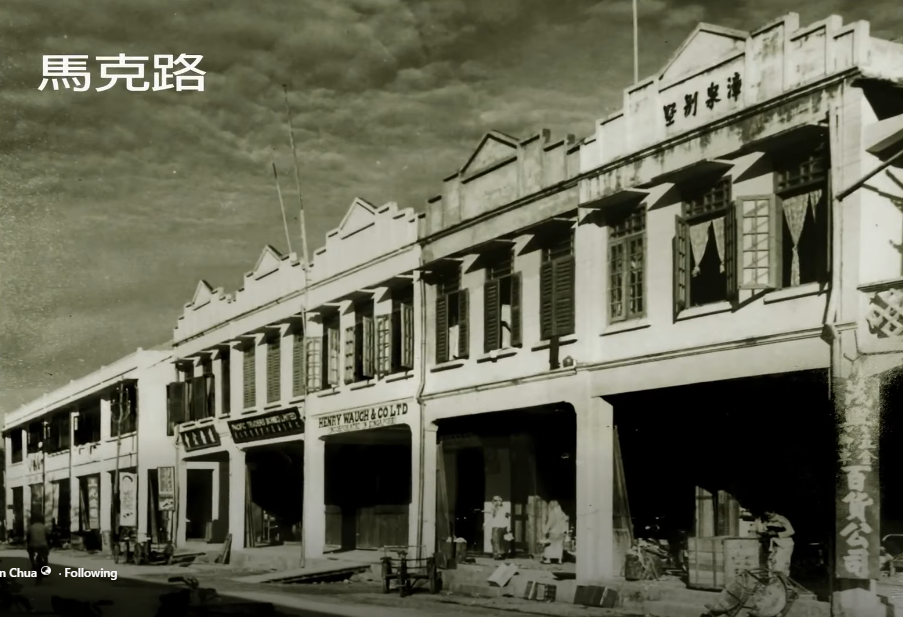
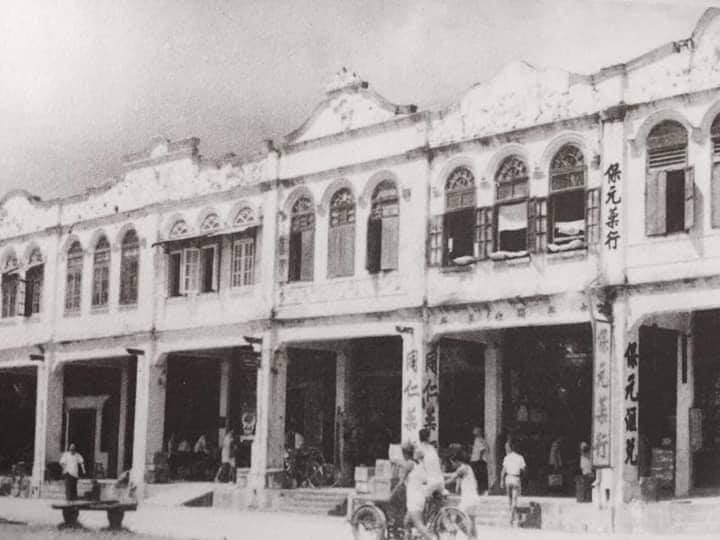
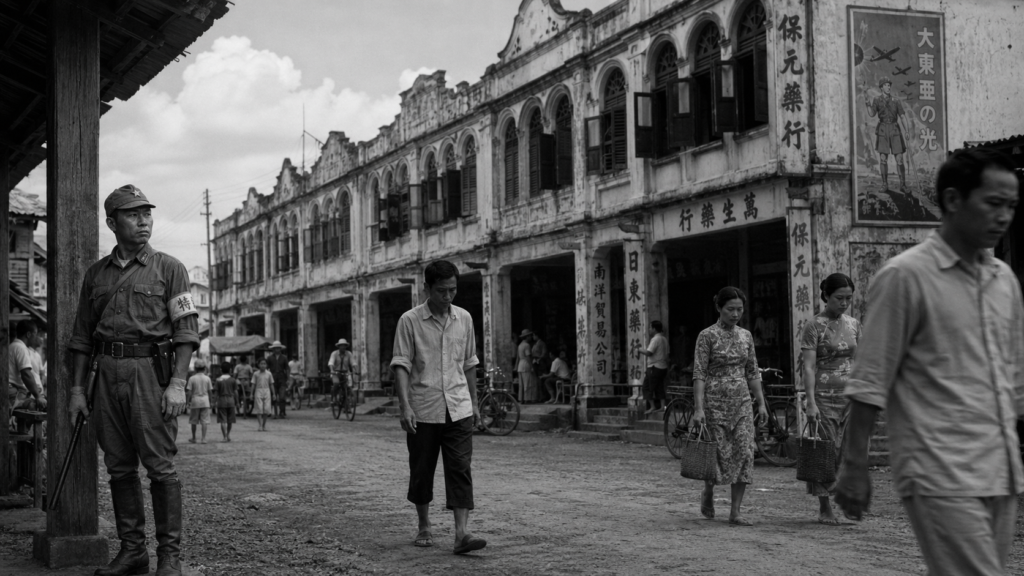
This is a photo of the Japanese army using bicycle to advance in MalayaI use it to create a scene of Japanese army cycling through Malaya’s plantationThis photo was created using GeminiI get Kling Ai to create the Bomb Shelter sceneThe Japanese war plane from Australian war memorialI use it to produce the Japanese bombing in SibuThe Sibu main bazaar along Channel Road, which I had used previously in the 1924 Sibu Fire video, I reuse it for multiple scenesWith Japanese planes flying over Sibu, people were looking upward into the sky to find out what’s coming.It was also turn into a scene where civilians started running upon hearing bomb sirenLater turn into the parade scene when the Allied had liberated Sibu, with most of the buildings already heavily damaged from Allied’s bombing earlier.I could not locate any photo of The Borneo Company godown, the new one at Island Road was built only after the war, but as the old one was near the wharf, next to Tua Pek Kong temple, so this is the nearest I can findSo I remove the ship at the back and created one There is a good photo on Sime Darby official site, so I am in luckI created the looting and riot scene on Sime Darby storeThe Sarawak Steamship Company godown is the hardest to find, basically no one I had contacted has any old photo, or recollection on how it looked like, but as it was located near the wharf, next to the Tua Pek Kong temple, and was where the new 80th anniversary memorial monument was established in 2025, so I think it could be the current Rejang Port Authority (RPA) site, so I created oneAnd done the aerial bombing and on the ground scene
The Sibu-shu offices
As there were 3 different office mentioned in Bob Reece’s Masa Jepun, so I have to look for locations
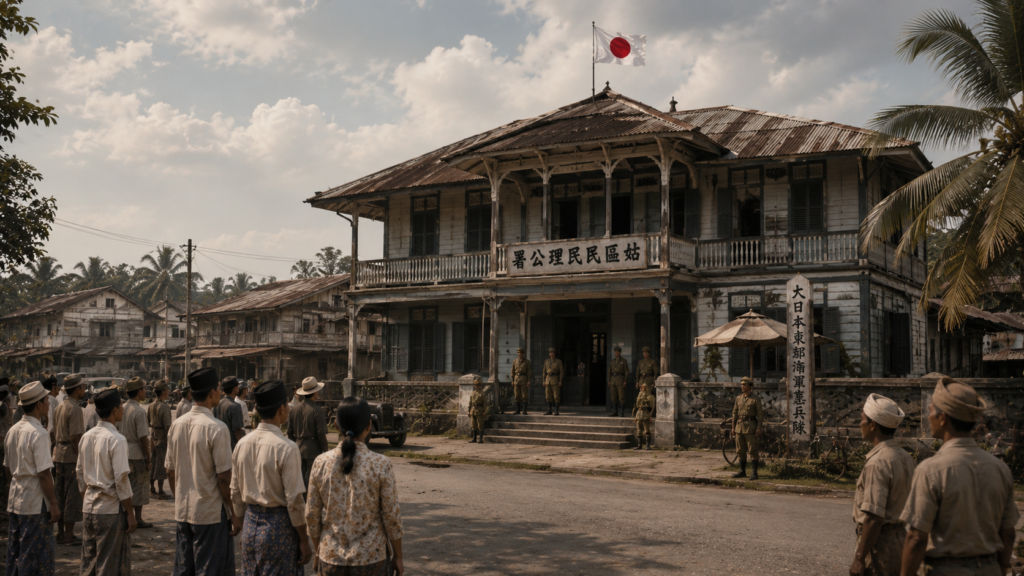
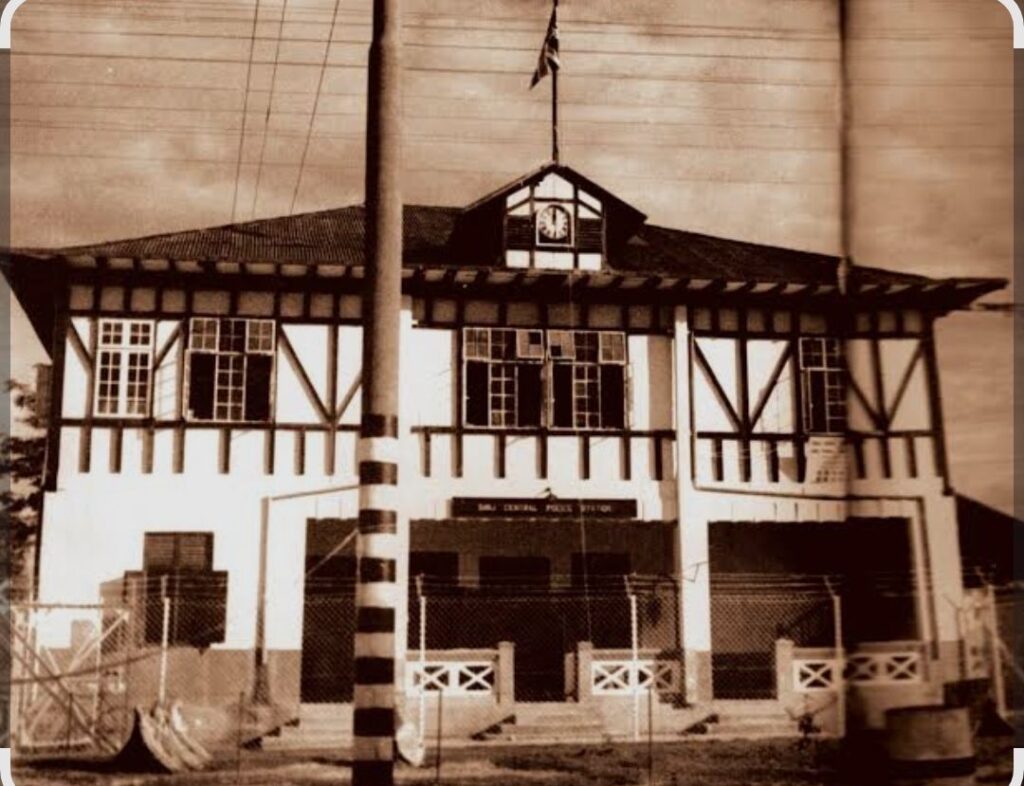
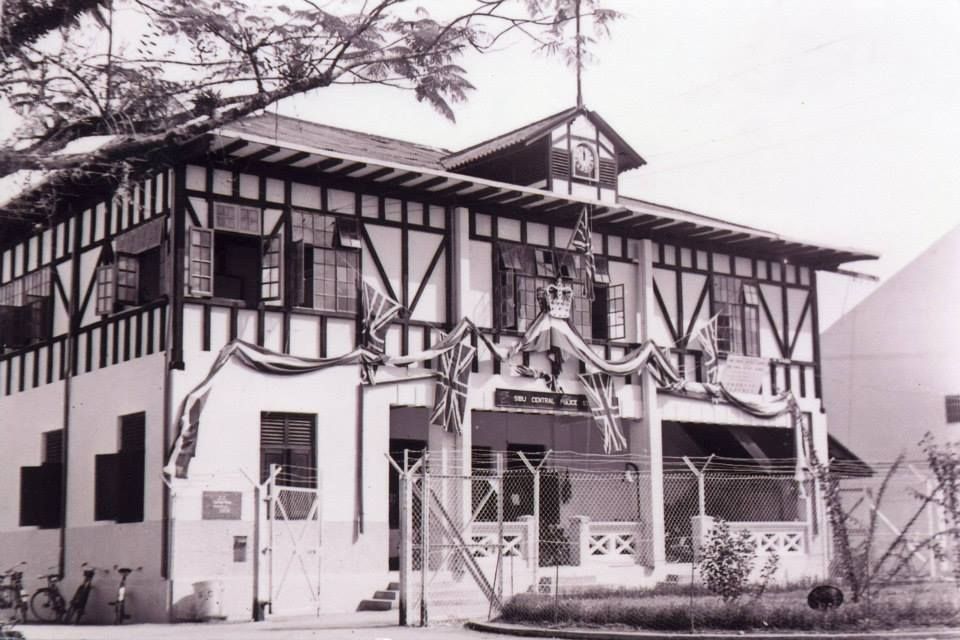
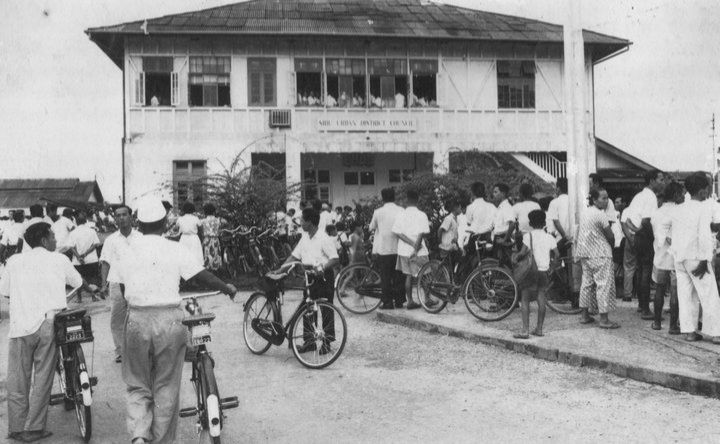
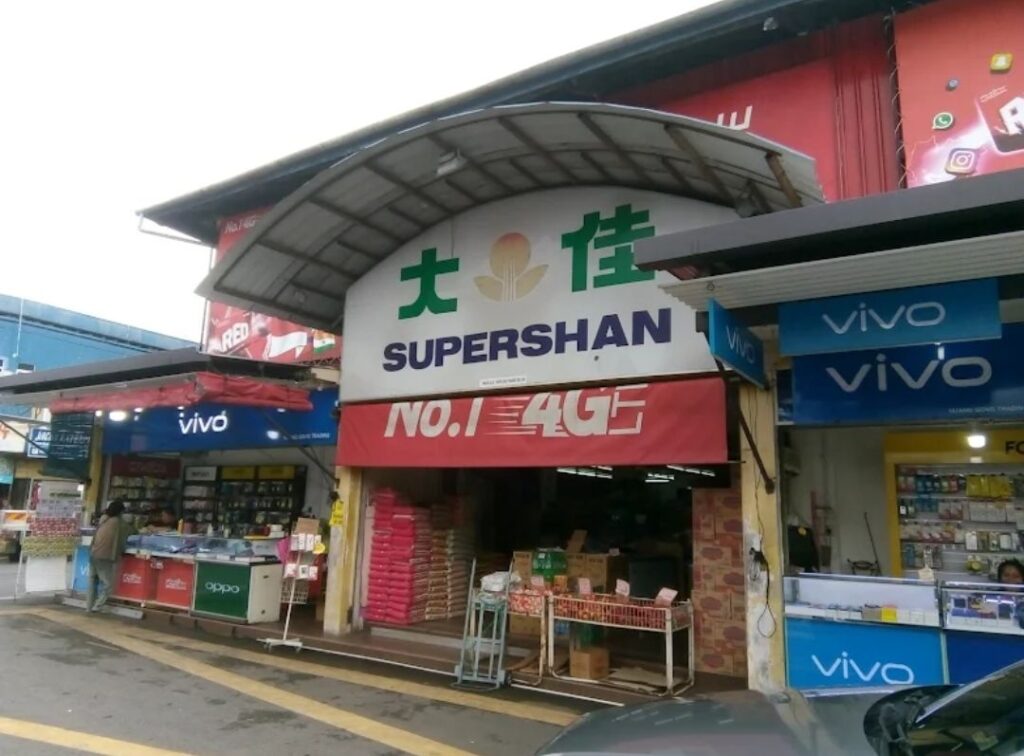
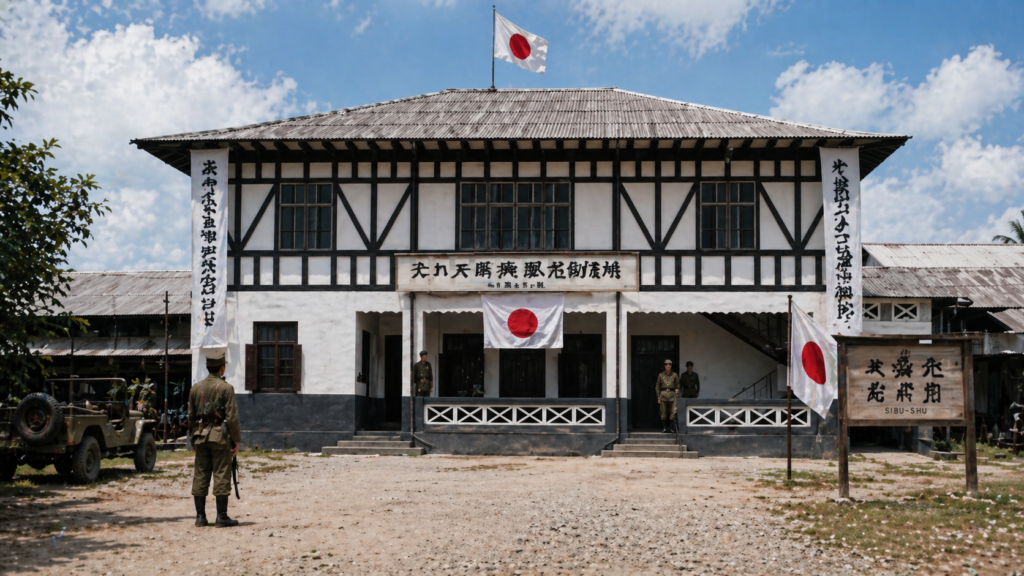
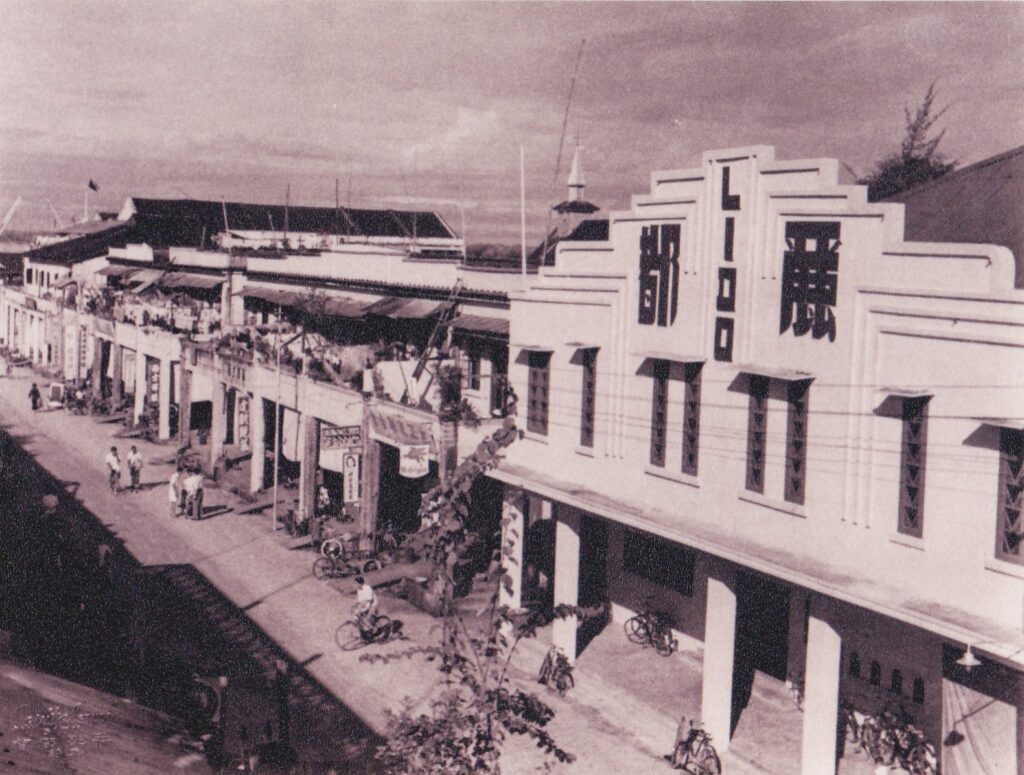
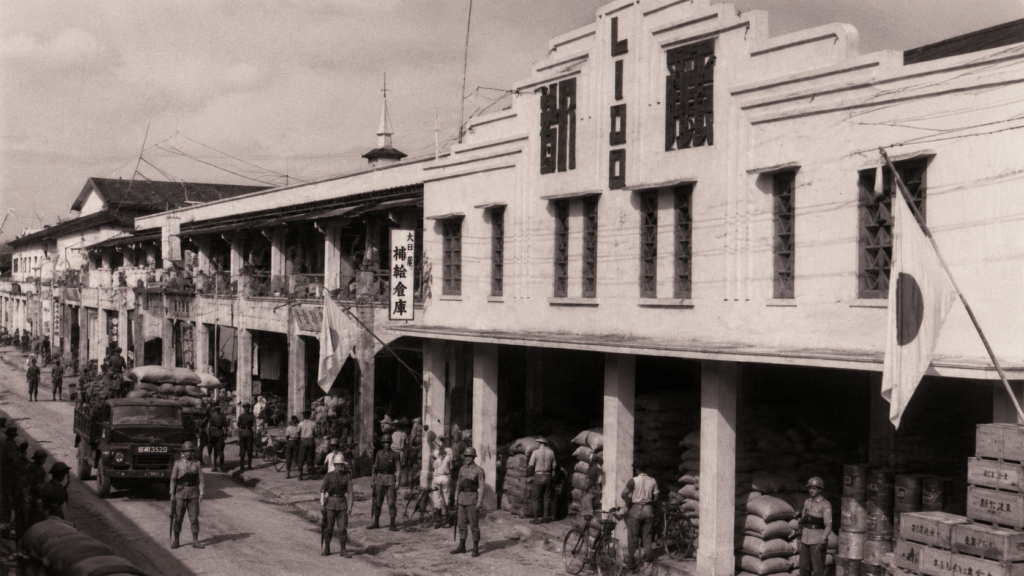
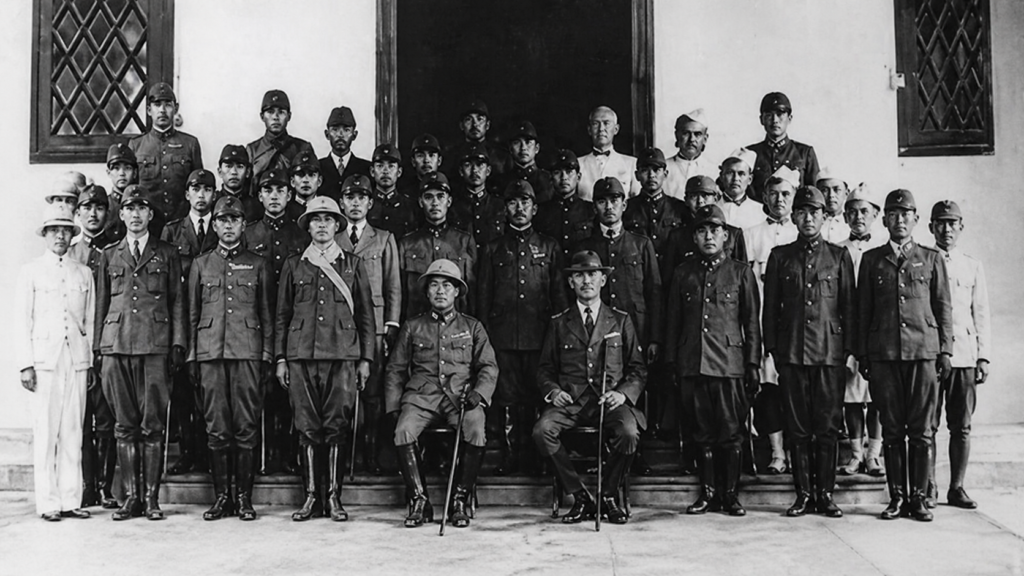
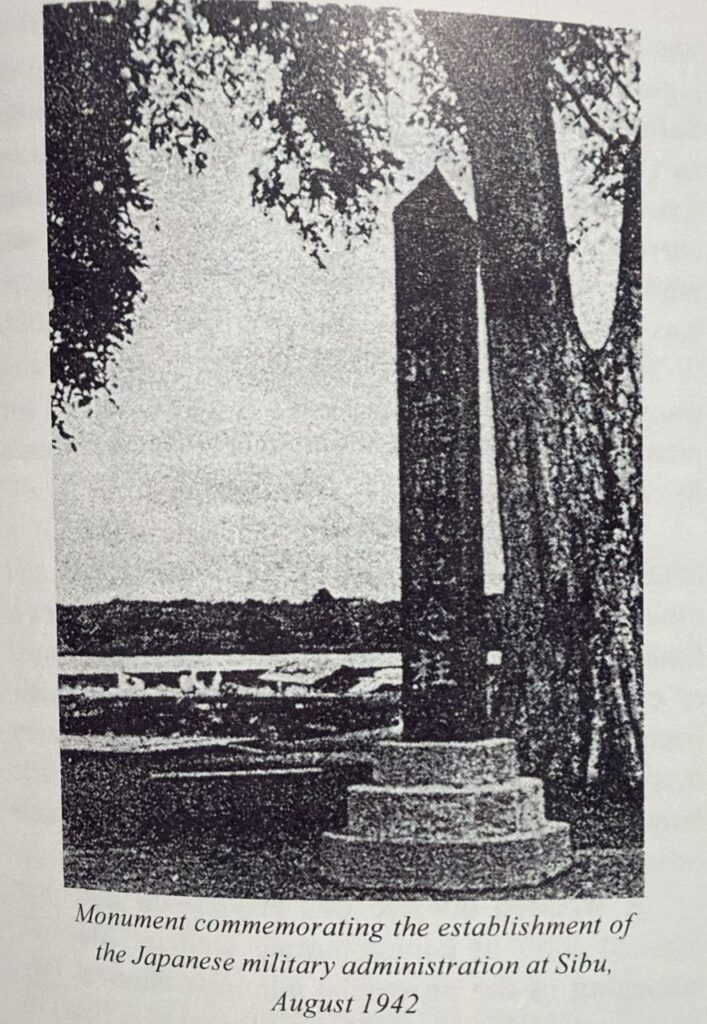
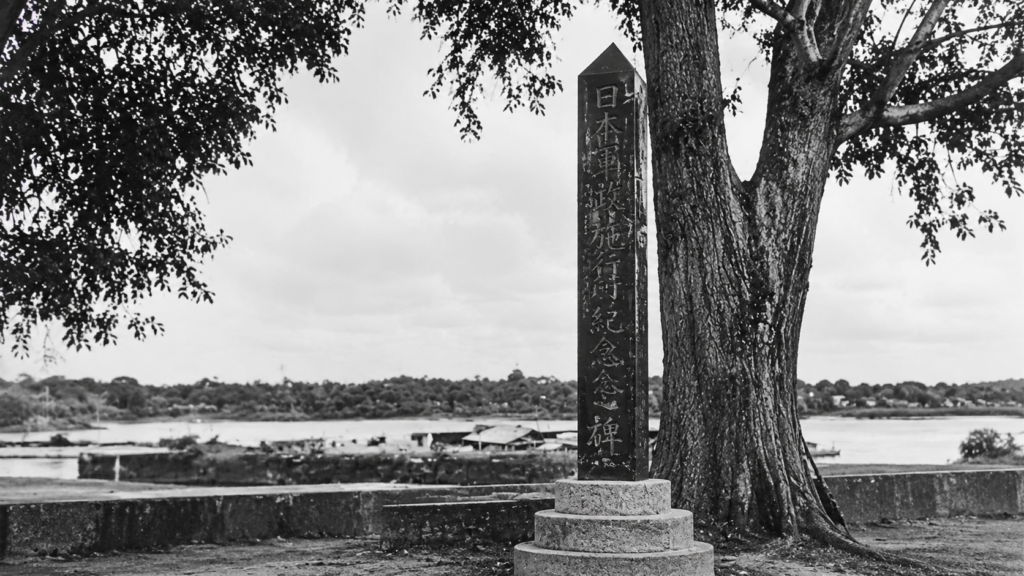
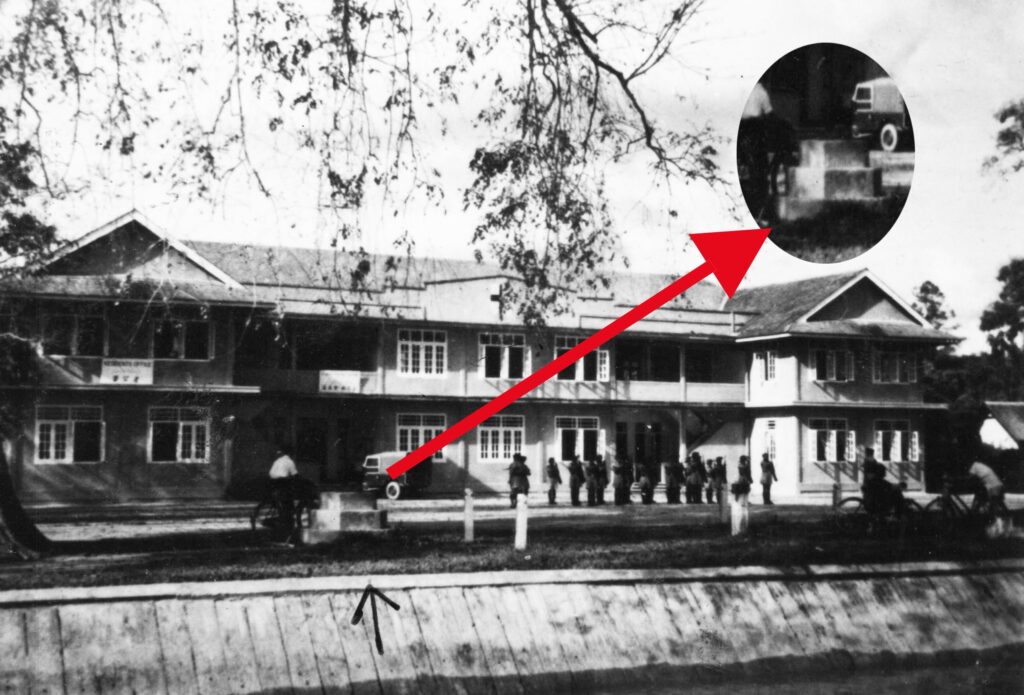
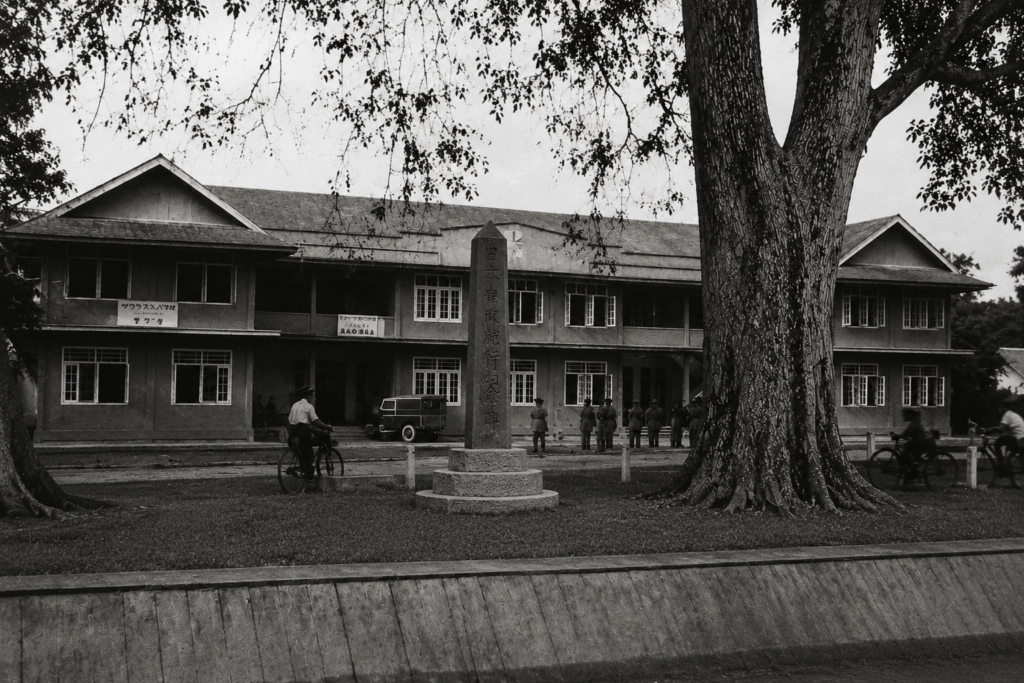
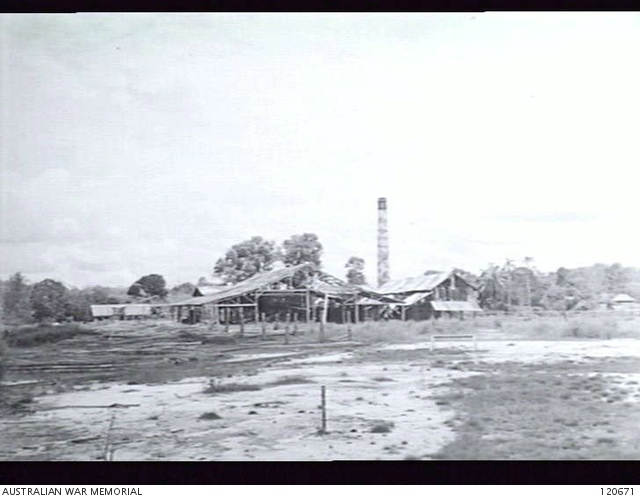
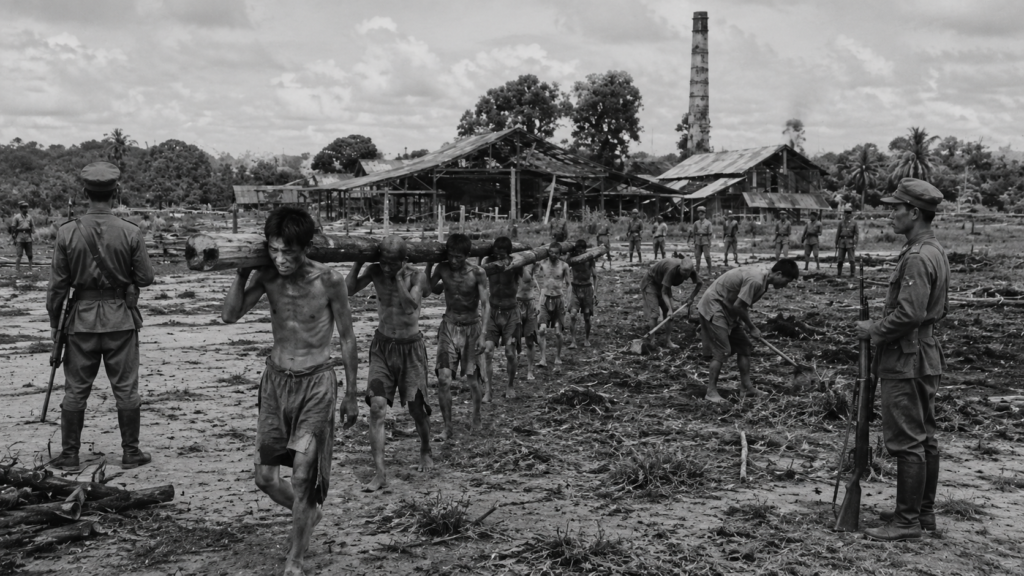
Bob Reece mentioned the local Shang Tuan (group of businessmen) had allocated a villa (漳泉别墅) to the first arrival Japanese team as temporary office, but looking at the photo above, it did have a 漳泉别墅 on top of the building, but it is more of a shoplot, not a villaSo I created a “villa” building to be used at the sceneThe Japanese operation centre is another one, Bob mentioned it is located near the waterfront, and we have this building from an old archive. I think it had been used as the British office, so this could be the oneIt was previously a Administrative British officeWhich later turn into the immigration office in the 1960-70s, where people go there to apply for ICsIt is now a supermarket.So I created this new Japanese Operation officeThis is Lido cinema in the 1950sJapanese use it as a warehouseI found many instances of the the appointment of the new Sibu-shu Residence, when formal administration of Sibu-shu was proclaimed on 8 Augus, 1942, where the visiting general from Kuching doing a Group photo with the new administration. Original photo from Veronica Chang-Schmid’s post‘ on FacebookI restored the photo into better and higher resolutionI restored the photo and make it a photo taking session sceneThis is the old Bank Street photosI use it to turn into a Kempei-tai scene, where everyone walked passed avoiding eye contact with the Kempei-tai, that’s the fear under Japanese occupation. This is a very old photo of the Monument Japanese erected commemorating the establishment of the Japanese military administration in Sibu-shu, August 1942 Photo taken from Bob Reece’s Masa Jepun BookI managed to do a decent restoration along the river front, there was a scene where the monument was erected, and also a scene where the monument was demolished by a group of angry people after the Japanese surrenderChua Chong Hian has a post on his Facebook have the old photo of the location of the monument, only the foundation base left, after angry mob demolished the monument after the war. I had used the photo to recreate the monument demolition scene after the war. If you look at the riverside view of the monument at that time, there was a tree, so I have the tree reinstated beside the monumentThis is an unnamed sawmill in Sarawak, not sure where’s the location and name
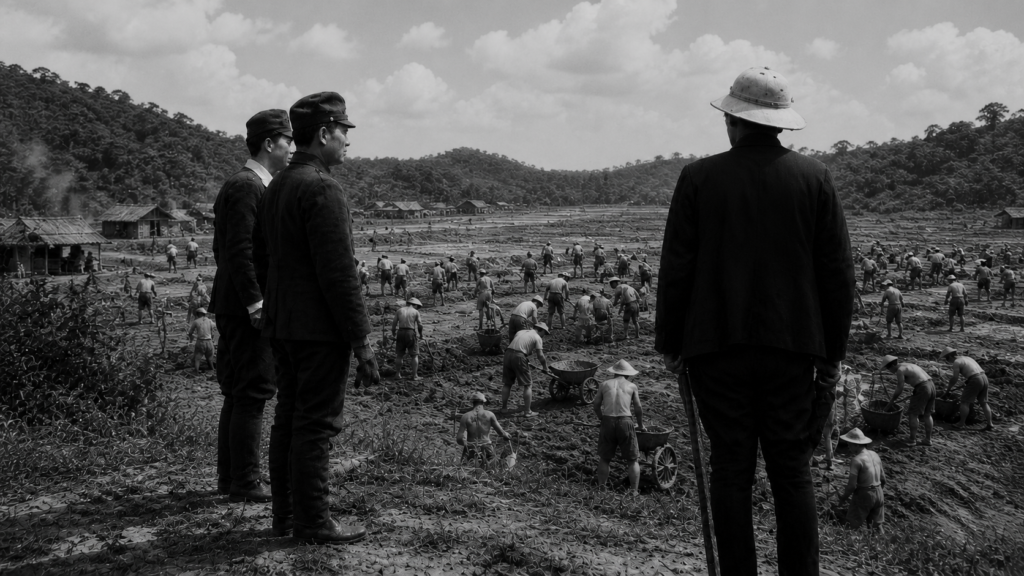
I used it to create a scene where Japanese forced the laborers to extract and process timber for their constructions
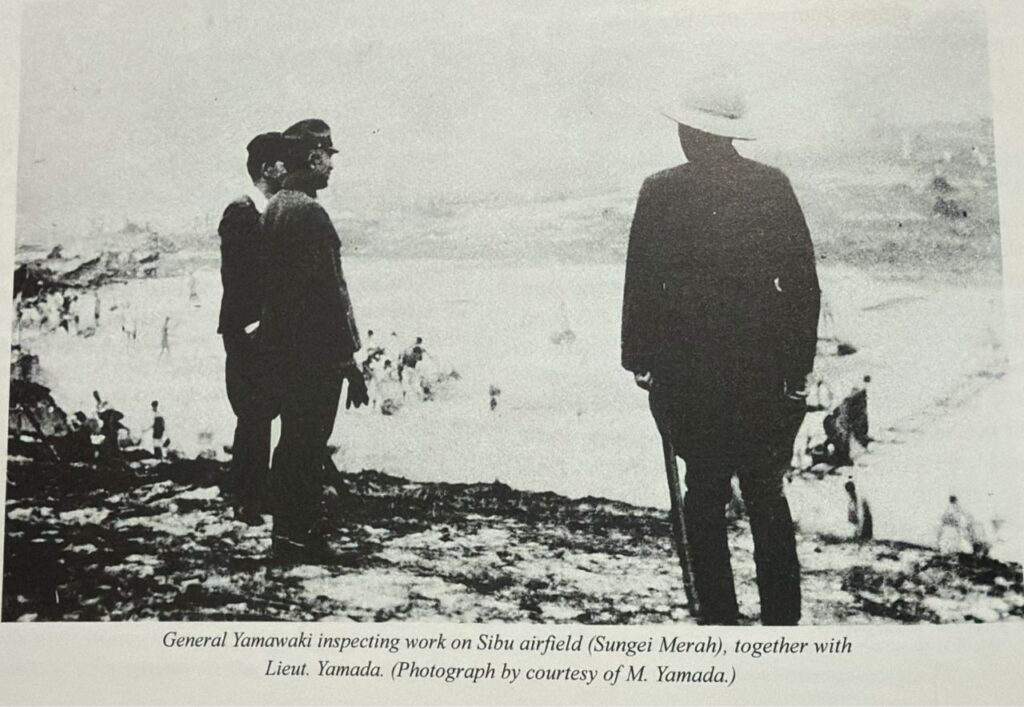
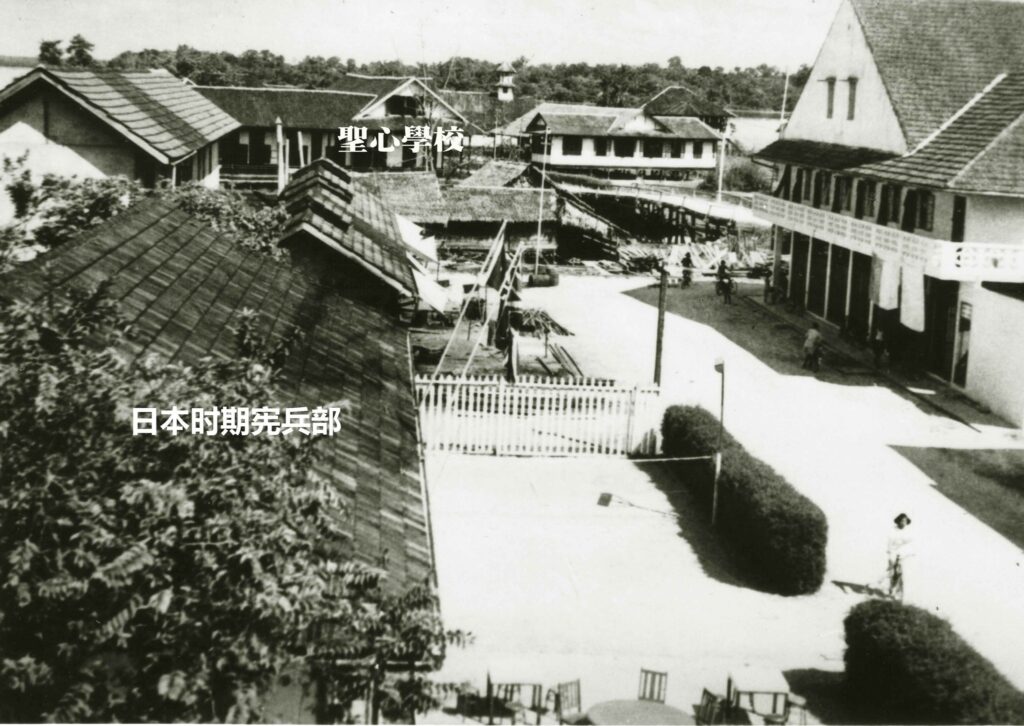
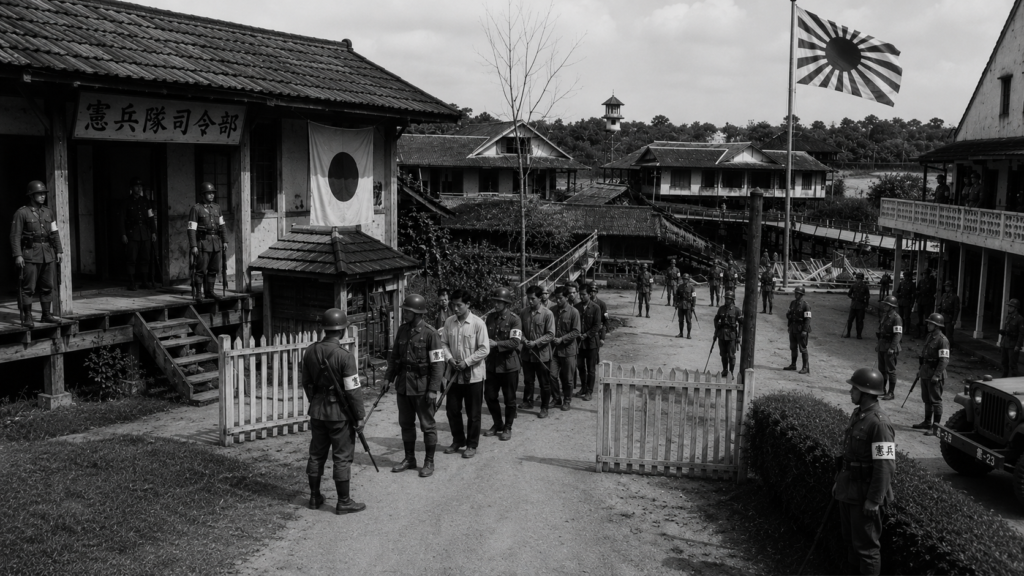
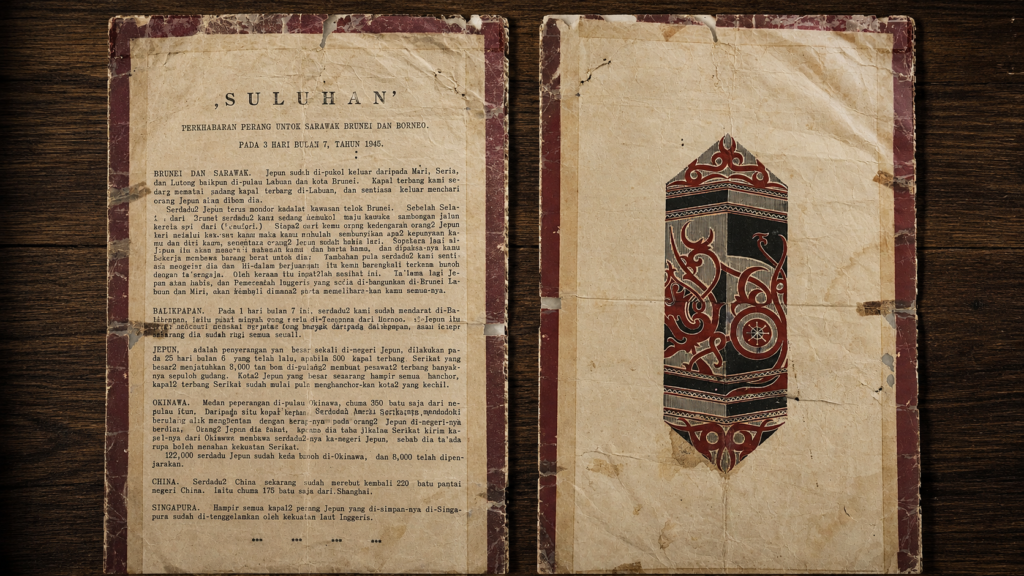
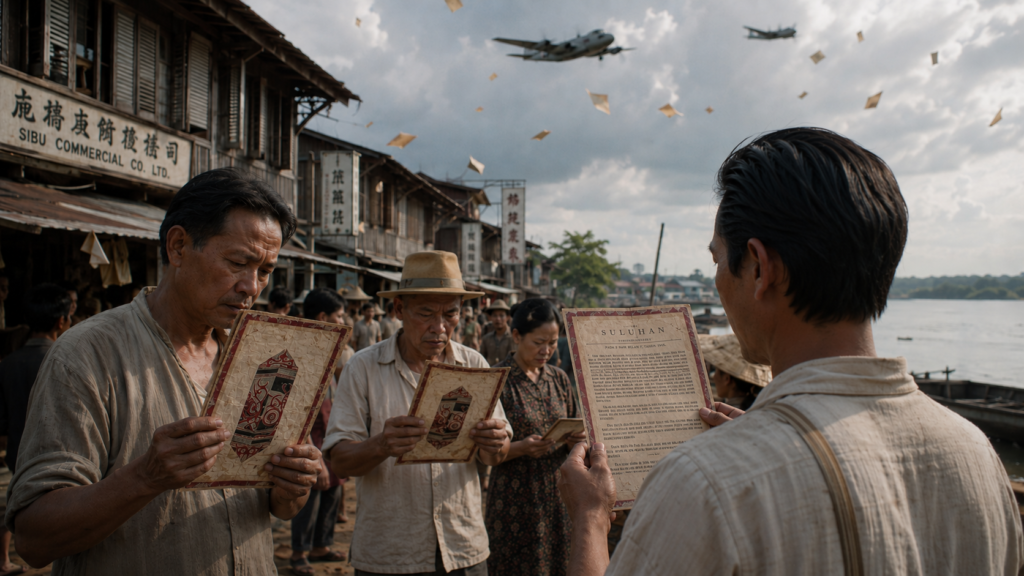
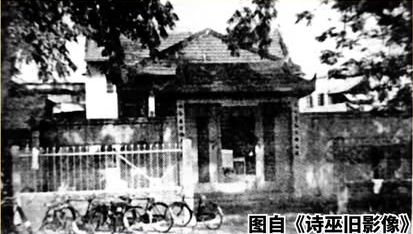
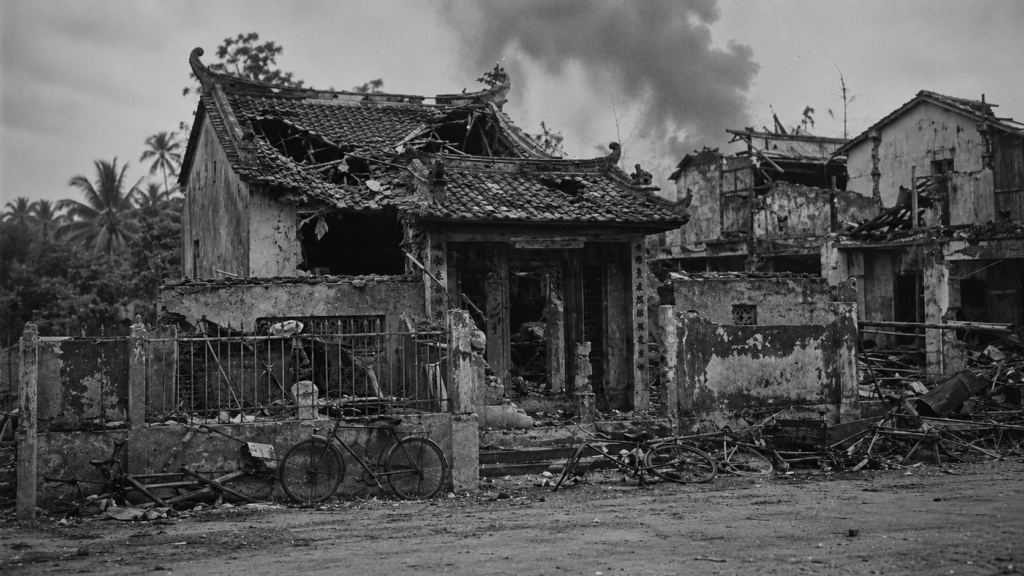
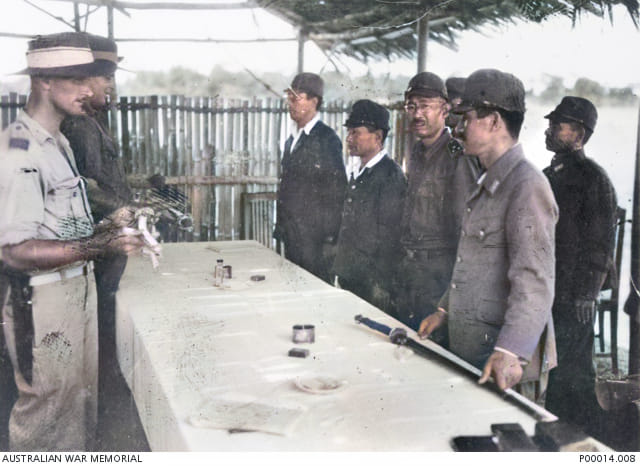
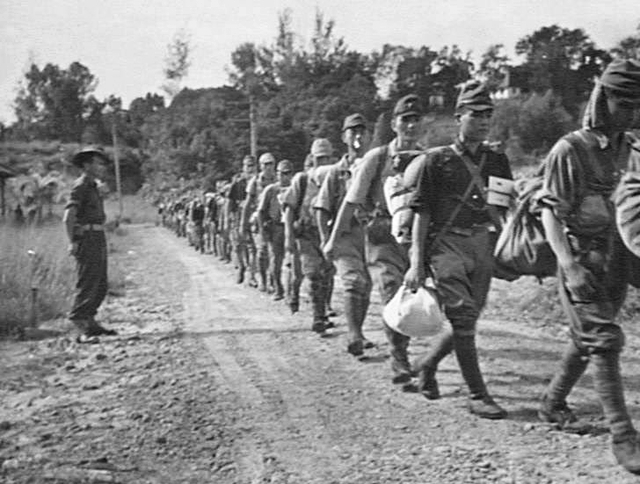
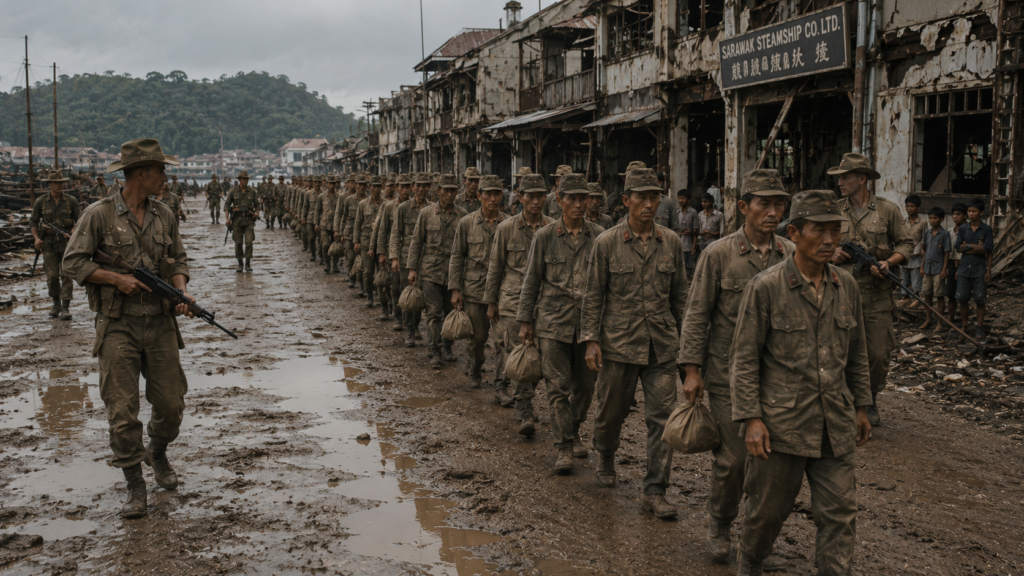
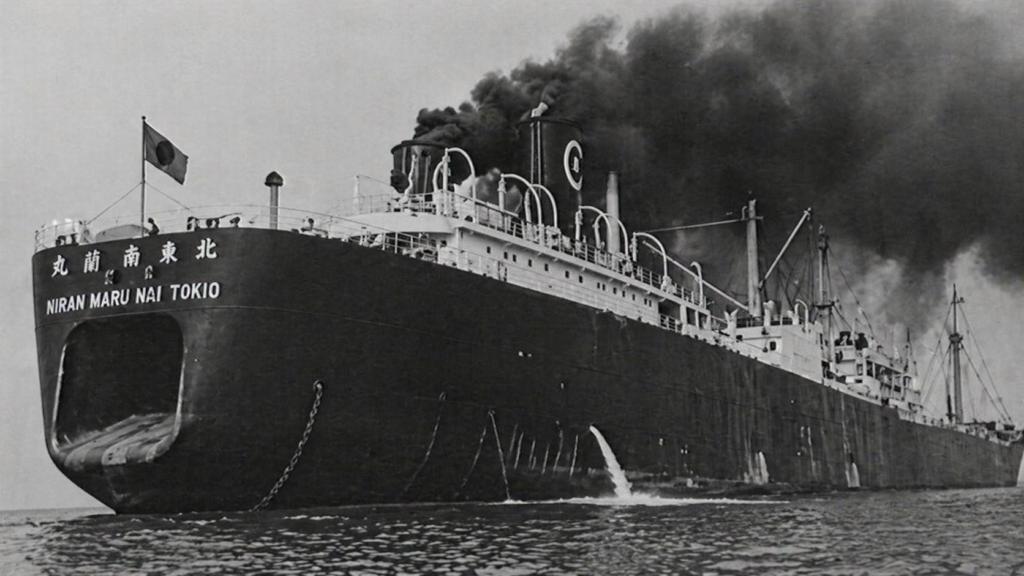
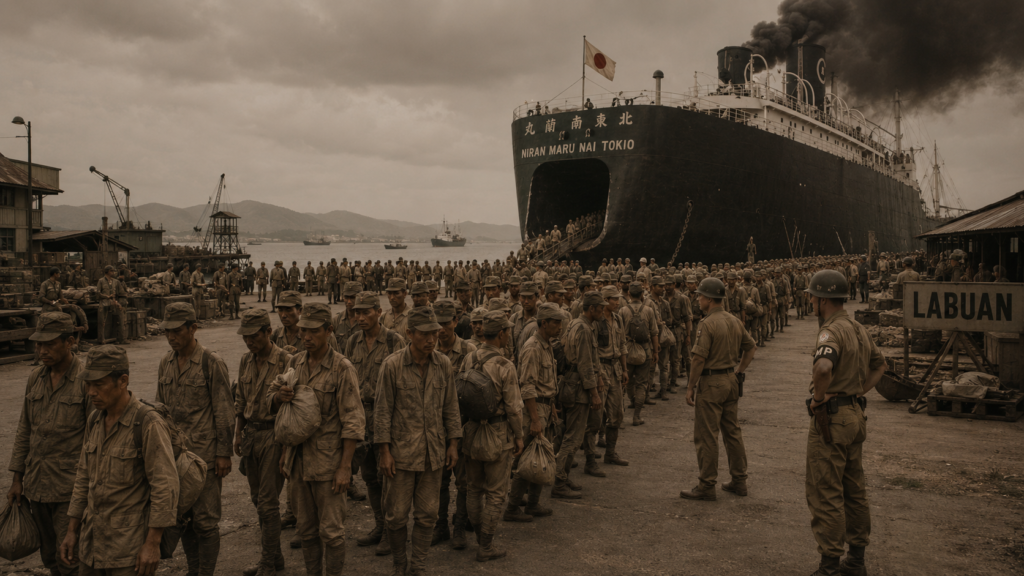
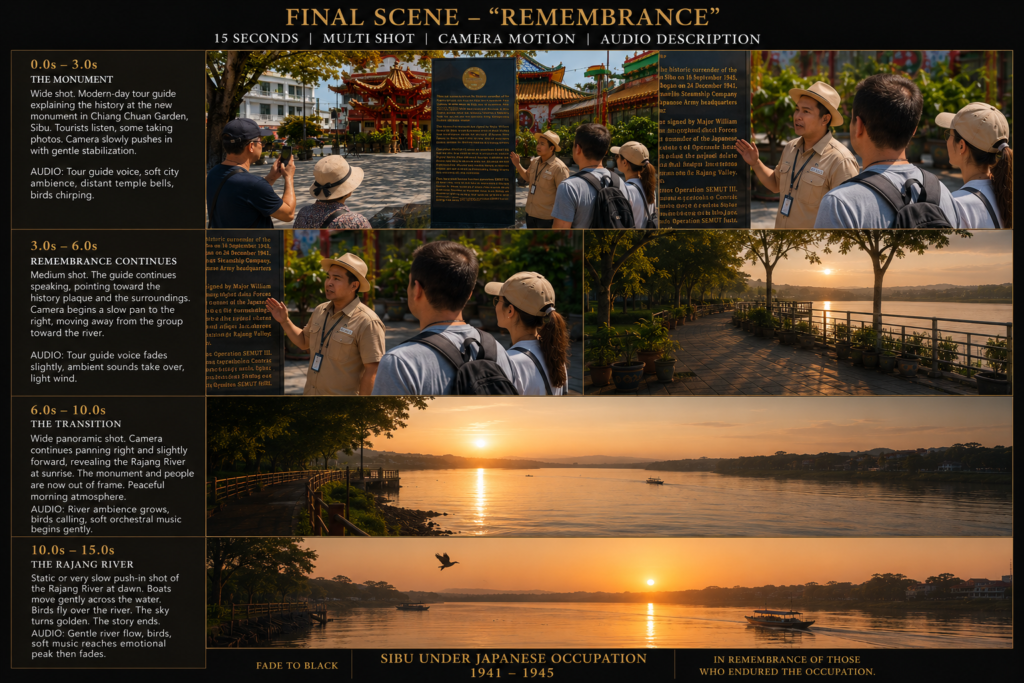
This is quite a blur photo found in Bob Reece’s Masa Jepun, taken during the construction of Sibu Airfield in Teku, near Sungei MerahI restore it and used it in one of the sceneI found one photo from Chua Chong Hian’s facebook – https://www.facebook.com/chonghian, saying this building used to be the Kempei-tai office during the Japanese occupationI used the building and it’s surrounding building to create a scene where the Kempei-tai bringing in people for interrogationsI found this on Mike Kueh’s Post facebook, the phamplets that the Allied dropped from the planes to inform civilians that Japanese is losing the war https://www.facebook.com/share/p/1B9MD7dcZJ/I use the phamplet in one of the sceneThis is a very old photo of Tua Pek Kong temple, undatedAs the report from multiple sources all saying the the Tua Pek Kong temple was severely damaged, so I use the old photo to created the after bombing sceneI was looking for a surrender scene for a smaller town, this one is for a smaller town in Sabah I use the above photo to create a similar scene between the Australian commander Sochon and the Japanese commander, Lieut. NodaThis is a photo of the disarmed Japanese soldiers in Jesselton (KK)I use it to create a similar look when the Japanese solders were marching to the detention holdout camp, waiting to be sent to Kuching.This is Niran Maru Nai Tokio, I use it to create the big Japanese vessel used to transport the Japanese Soldeirs holdout in Labuan Island back to JapanThis is the scene before boarding.The monument commemorating the 80th Anniversary of the Surrender of the Japanese Imperial Army in Sibu was funded through Senator Robert Lau’s senator grant. And I used the photo posted on his FacebookTo create the scene of current day, where a tour guide was explaining to tourist about the monument, and later pointing to the Rejang River, and that’s where we end the video. FINAL SCENE — “REMEMBRANCE” Remembrance, reconciliation, survival and enduring historical memory
2 thoughts on “The Making of Sibu-Shu 志布州 – Sibu Under Japanese Occupation (1942–1945)”
Chung Ling
My congratulations for an excellent historical document that I chanced upon today. Born a year before the Japanese surrender and spending the first 20 years of my life growing up in Sibu, I naturally have immense interest in this period of our history. The stories told by my parents and elders of those four years of absolute hell during the Japanese occupation, and of the very difficult early years of growing up faced with constant starvation and disease, are still fresh in my mind.
I have researched the POSTAL History of the Japanese Occupation 1942-45 and have achieved reasonable success in exhibitions in Taipei, Jakarta and Bandung. Some of the work has been communicated in the Sarawak Journal, published by the Borneo Philatelic Society (formerly the Sarawak Specialists’ Society) London.
My next exhibition will be the Liberation from Japanese Occupation and British Re-Occupation 1945-1946.
I have another project: The last days of the third Rajah Vyner Brooke prior to the Japanese Invasion. Started a year ago, I think I might not be able to complete the paper, simply because there are huge gaps in the primary source of information.
*Lim Kai Zhen was a Methodist pastor, well known to our family
*Sibu Resident and the Brooke’s men left by boat under cover of darkness for Kapit ~ 1941.12.26
after soon after Sibu was bombed.
*The following night government go-down was broken in; it was every body for himself;
Father struggled for much of the night to bring home a sack of rice;
Japanese order to return “looted” goods was probably issued around April 1942;
I recall Father telling us that some Japanese soldiers called on the house,
checked on our rice stock which now had reduced to half a sack and took no action.
*McPherson (Resident of Sarikei?) if my source of information is correct, did not cross over to Dutch Borneo,
where all the Rajah officers and civilians who did, were slaughtered at Long Nawan.
McPherson and his Iban family returned to Sarikei where he was killed by the Japanese.
Thank you for your command. Glad to know that you had done some extensive research on Sarawak’s past.
My story is based on Bob Reece’s “Masa Jepun”, with most fact references validated there, McPherson was the Resident of Sibu at that time, Sibu means Sibu Division during Brookes’ era, which will include the current 3rd, 6th & 7th divisions, that’ll include Sarikei.
So far most references are pointing to Macpherson and his entire party was executed at Long Nawan. His wife and infant child were among the victims. I am not a historian, maybe there are other sources that differs.
What I do is to use Ai to produce documentary video on interesting history topic, maybe some day we will cross path in one of your research topics

My congratulations for an excellent historical document that I chanced upon today. Born a year before the Japanese surrender and spending the first 20 years of my life growing up in Sibu, I naturally have immense interest in this period of our history. The stories told by my parents and elders of those four years of absolute hell during the Japanese occupation, and of the very difficult early years of growing up faced with constant starvation and disease, are still fresh in my mind.
I have researched the POSTAL History of the Japanese Occupation 1942-45 and have achieved reasonable success in exhibitions in Taipei, Jakarta and Bandung. Some of the work has been communicated in the Sarawak Journal, published by the Borneo Philatelic Society (formerly the Sarawak Specialists’ Society) London.
My next exhibition will be the Liberation from Japanese Occupation and British Re-Occupation 1945-1946.
I have another project: The last days of the third Rajah Vyner Brooke prior to the Japanese Invasion. Started a year ago, I think I might not be able to complete the paper, simply because there are huge gaps in the primary source of information.
*Lim Kai Zhen was a Methodist pastor, well known to our family
*Sibu Resident and the Brooke’s men left by boat under cover of darkness for Kapit ~ 1941.12.26
after soon after Sibu was bombed.
*The following night government go-down was broken in; it was every body for himself;
Father struggled for much of the night to bring home a sack of rice;
Japanese order to return “looted” goods was probably issued around April 1942;
I recall Father telling us that some Japanese soldiers called on the house,
checked on our rice stock which now had reduced to half a sack and took no action.
*McPherson (Resident of Sarikei?) if my source of information is correct, did not cross over to Dutch Borneo,
where all the Rajah officers and civilians who did, were slaughtered at Long Nawan.
McPherson and his Iban family returned to Sarikei where he was killed by the Japanese.
Thank you for your command. Glad to know that you had done some extensive research on Sarawak’s past.
My story is based on Bob Reece’s “Masa Jepun”, with most fact references validated there, McPherson was the Resident of Sibu at that time, Sibu means Sibu Division during Brookes’ era, which will include the current 3rd, 6th & 7th divisions, that’ll include Sarikei.
So far most references are pointing to Macpherson and his entire party was executed at Long Nawan. His wife and infant child were among the victims. I am not a historian, maybe there are other sources that differs.
What I do is to use Ai to produce documentary video on interesting history topic, maybe some day we will cross path in one of your research topics